Choosing the Best Home Gym Equipment Shouldn’t Be This Confusing
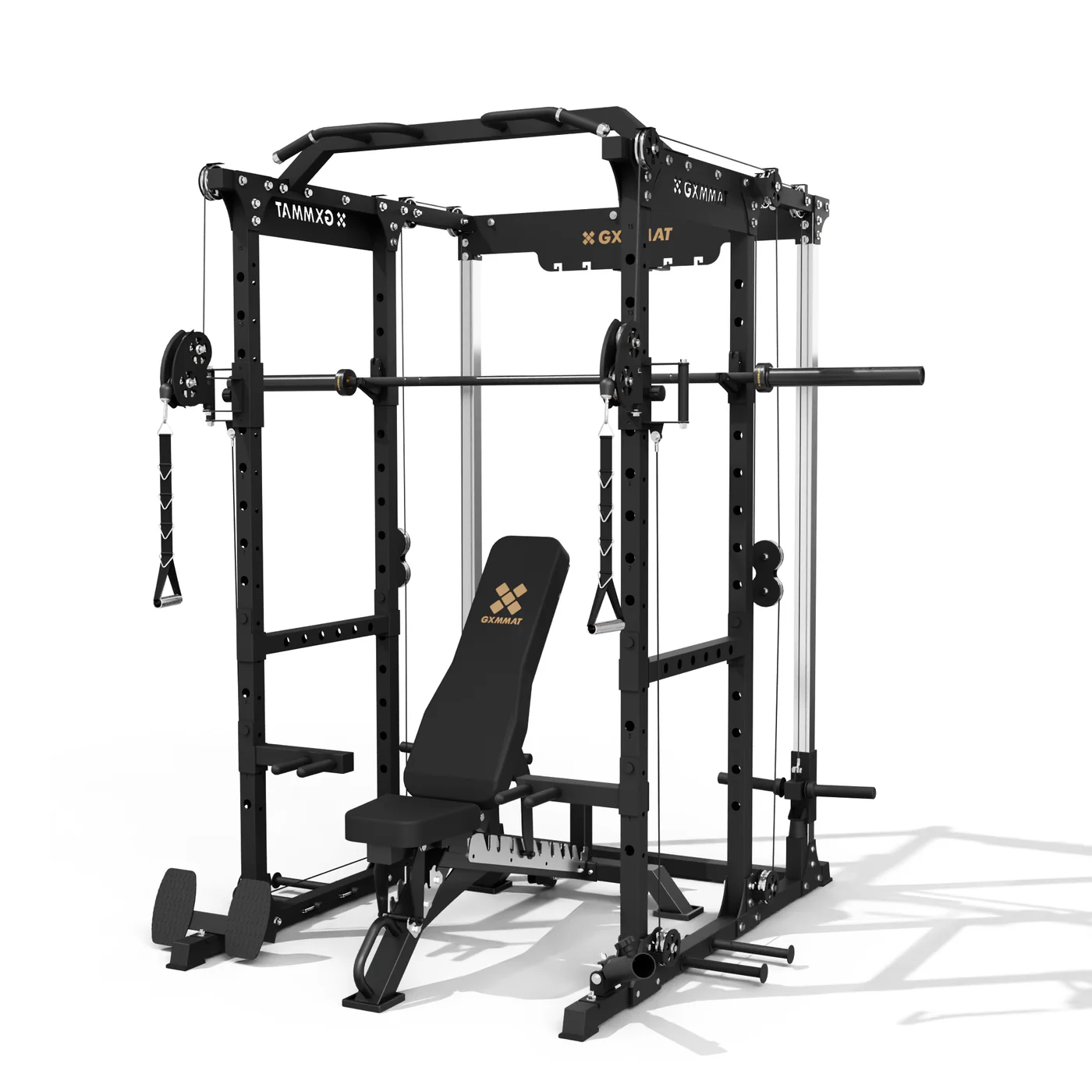
You’re ready to build a home gym. You’ve committed to getting stronger, and you want equipment that will actually support your goals. But within minutes of searching “best home gym equipment,” you’re drowning in options.
Power racks. All-in-one machines. Cable systems. Dumbbells. Smith machines. Functional trainers. Each piece costs hundreds or thousands of dollars. Each review says something different. And none of them clearly explain whether they’ll actually help you build strength or just gather dust.
Here’s the truth: most home gym equipment fails at the one thing that matters most—supporting progressive overload. Without the ability to systematically add weight over time, even expensive equipment becomes a limitation, not an investment.
This guide cuts through the marketing noise with research-backed analysis of every major equipment category. You’ll learn exactly what each type does well, where it falls short, and which configurations deliver the best results at four different budget tiers from $300 to $3,000+.
Table of Contents
- What Makes Good Home Gym Equipment?
- Equipment Comparison: Deep Dive
- Budget Tiers with Specific Equipment Configurations
- Common Mistakes to Avoid
- How Equipment Choice Affects Your Training Program
- Quick Reference: Home Gym Equipment Comparison
- Common Questions About Home Gym Equipment
- Further Reading & References
- Conclusion
What Makes Good Home Gym Equipment? (Complete Buyer’s Guide)
Before comparing specific equipment, you need a framework for evaluation.
Good home strength training equipment should score well across these three critical criteria:
Cost (Initial + Lifetime)
The sticker price only tells part of the story.
A $300 adjustable dumbbell set might seem cheaper than a $700 power rack, but what happens when you need to progress beyond 50 pounds? With dumbbells, owning a 20-pound set doesn’t make 25 pounds any cheaper—you buy each increment separately. With a barbell, once you own 20 pounds of plates, getting to 25 pounds only costs you 5 pounds more.
Space Requirements
Whether you’re in an apartment or garage matters. Some equipment like resistance bands pack into a drawer. Power racks require dedicated floor space (though folding racks help). All-in-one machines offer compact footprints but can’t be moved easily.
Ability to Implement Progressive Overload
This is the most important criterion. And the most-often missed criteria. Can you add weight in small increments? Can you implement periodization? Will the equipment support you as you get stronger, or will you hit a ceiling in 6 months?
Research from the American College of Sports Medicine shows that progressive resistance training produces the greatest strength gains when you can systematically increase load over time. Equipment that limits progression limits your results.
Now let’s evaluate each equipment type against these criteria.
Equipment Comparison: Deep Dive
Dumbbells
Cost: 😞 (Poor - each increment costs full price)
Space: 😊 (Excellent - compact)
Progression Ability: 😐 (Fair - difficult beyond 50-75lbs)
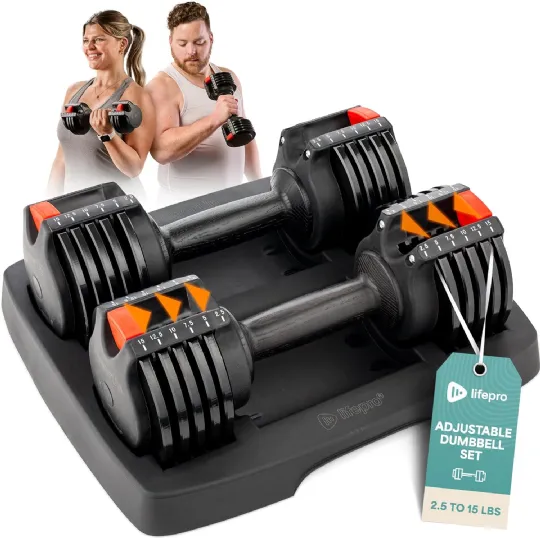
Adjustable dumbbells are often the first equipment people consider for a home gym, and for good reason—they’re simple, compact, and familiar.
But the cost structure reveals a hidden problem.
A quality adjustable dumbbell set ranges from $336 for the REP QuickDraw (5-60lbs) to $698 for Ironmaster sets that can expand to 120 pounds per hand with add-on kits. Budget options like the MX55 run $329 on sale, offering 10-55 pounds per hand.
The cost trap emerges when you outgrow your initial set. Unlike barbell plates that work across all exercises, each dumbbell weight increment requires purchasing an entirely new weight. A 20-pound dumbbell doesn’t make a 25-pound dumbbell cheaper—you’re buying from scratch each time.
Progression Limitations
Dumbbells work well for beginners and intermediate lifters performing accessory work. But two problems emerge as you get stronger:
- Loading heavy dumbbells onto your shoulders for exercises like overhead press or goblet squats becomes awkward and potentially dangerous above 60-75 pounds
- Cost scaling makes heavy dumbbell sets prohibitively expensive
For compound exercises like squats and deadlifts, dumbbells simply can’t match the loading capacity of barbells or commercial (or high-end home) machines.
Best for: Beginners or accessory work.
Skip if: You can afford a barbell and power rack or half rack.
Kettlebells
Cost: 😐 (Fair - each weight separate purchase, $1.50-3.00/lb, but unlike dumbbells you only need one kettlebell per exercise)
Space: 😊 (Excellent - compact)
Progression Ability: 😞 (Poor - not designed for linear progression)
Kettlebells occupy an interesting niche in home gym equipment. They’re excellent for specific training goals but problematic as a primary strength tool.
Research comparing kettlebells vs dumbbells shows that dumbbells activate muscles better for traditional pressing movements, while kettlebells excel at power development through ballistic exercises like swings and snatches. A 2012 study published in the Journal of Strength & Conditioning Research found kettlebell swings improved maximal and explosive strength production, but EMG studies show dumbbell overhead press had higher anterior deltoid activation than the kettlebell equivalent.
The Progression Problem
Kettlebells aren’t designed for the 5-15 rep range that builds maximal strength and hypertrophy. They shine in power development and conditioning—valuable training qualities, but not substitutes for progressive strength work.
Best for: Specific functional training or supplementary work, or athletes training specific explosive movements
Skip if: You can afford a barbell and power rack or half rack
Barbell + Power Rack (The Winner for Most People)
Cost: 😊 (Excellent - best value for progression)
Space: 😊 (Fair to Excellent - folding racks available)
Progression Ability: 😊 (Excellent - industry standard)
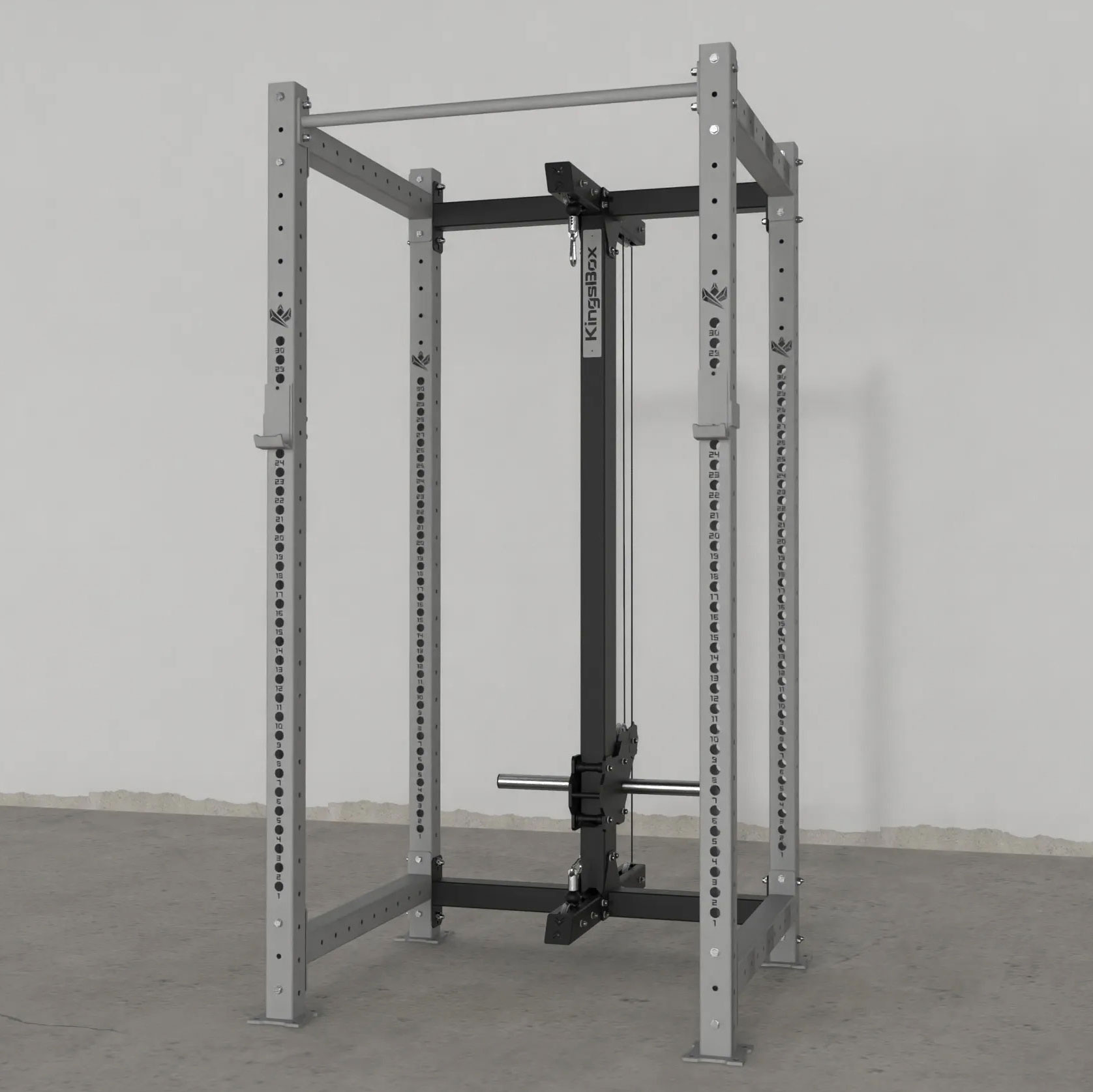
Here’s the truth most home gym guides won’t tell you plainly: a barbell plus power rack is the best value for nearly all strength training goals, period. It’s the equipment configuration used by powerlifters, Olympic weightlifters, bodybuilders, and strength coaches worldwide — not because it’s trendy, but because it works.
Cost Analysis
A complete budget setup costs $800-$1,000 total:
- Basic power rack with cable attachment: $360-700
- Budget barbell: $100-150
- Weight plate set (255lbs): $200-300
- Adjustable Bench: $150
That’s less than many single pieces of equipment, and it supports progression for years, likely throughout your entire lifetime of training.
The Progressive Overload Advantage
Once you own weight plates, progression becomes cheap. Need to add 5 pounds to your squat? That’s $10-15 in plates that work for every barbell exercise—squat, bench press, deadlift, overhead press, rows. Compare this to dumbbells where each weight increment requires purchasing an entirely new set of dumbbells.
Safety Features Matter at Home
Training alone at home without a spotter makes safety critical. Power racks include adjustable safety bars that catch the barbell if you fail a rep on squats or bench press. Proper coaching can help ensure safe technique, but when training alone at home, safety features become essential injury prevention.
Cable Attachments Transform Versatility
Adding a $350 plate-loaded cable attachment or high-low pulley system to your power rack gives you the functionality of a $1,500 functional trainer. This creates a true “home gym with cables” setup that handles compound barbell lifts AND isolation cable exercises—the best of both worlds.
If you also add the ~$50 “landmine” attachment you can imitate many dumbbell exercises for accessory work, without purchasing a single dumbbell.
The Intimidation Factor
Yes, power racks look intimidating if you’ve never used one. And there is indeed a small learning curve the first couple of times you workout in a power rack. But this is a one-time hurdle that pays dividends for years. Most people who overcome the fifteen minutes of initial learning curve wonder why they waited so long.
Best for: Nearly everyone, so long as you have space and budget.
Skip if: You have access to a commercial gym, or you don’t have space or budget.
Smith Machines
Cost: 😞 (Poor - $800-2,500+ for inferior results)
Space: 😞 (Poor - large footprint, no folding options)
Progression Ability: 😐 (Fair - allows progression but with limitations)
Here’s our contrarian take: Smith machines are a poor investment for home gyms. They’re expensive, they limit functional strength development, and research shows they activate fewer muscles than free weights.
The Fixed Bar Path Problem
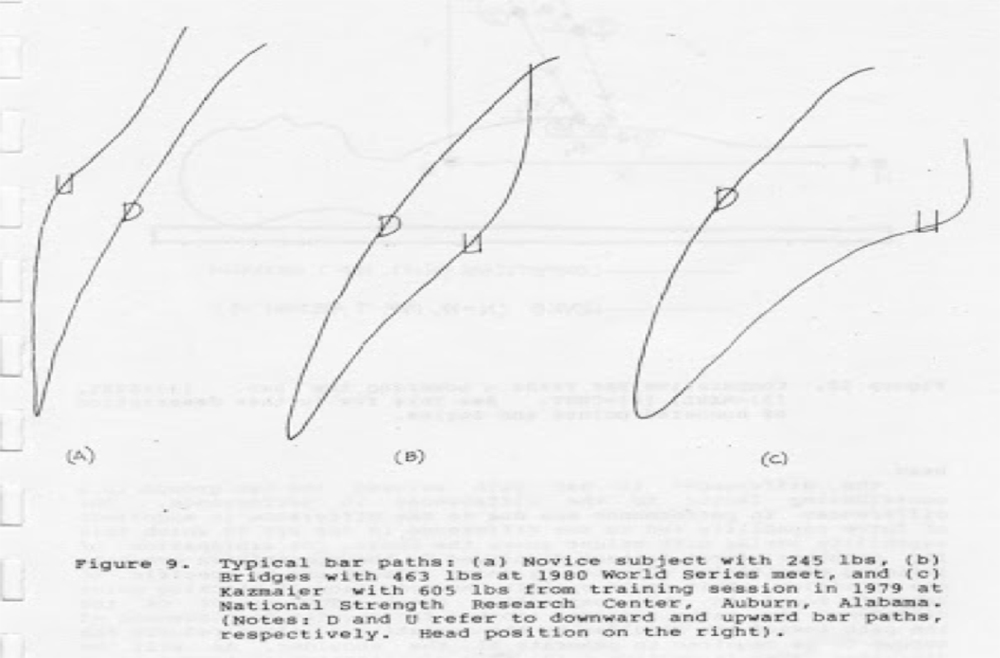
A Smith machine locks the barbell into a fixed vertical (or near-vertical) track. Sounds safe, right? The problem is that natural human movement doesn’t follow perfectly straight lines.
Research comparing Smith machines to free weights found “significantly greater activation of the medial deltoid in free weight bench press than in Smith machine bench press.” Why? Because the instability of free weights requires more stabilizer muscle activation to control the weight.
A proper bench press follows a curved bar path—starting over your chest and finishing over your shoulders. Studies on EMG activity show that forcing this movement into a straight line reduces muscle activation and can place unnecessary strain on joints.
Some Smith Machines have an angled track. This helps with bench, but is a disaster for squats and deadlifts.
Reduced Functional Strength Transfer
Research shows free weights are more effective at strengthening muscles like plantar flexors, knee extensors, and knee flexors because they demand greater stabilization effort. Strength built on a Smith machine doesn’t transfer as effectively to real-world movements or sports performance. At the same time, Smith machines are also not as optimized for hypertrophy (muscle size increase) as functional training machines.
The Safety Myth
Smith machines are marketed as safer than free weights, but this is misleading. A power rack with properly set safety bars - and a lifter who knows how to use it, like you, who’s willing to read a 10 page blog post - is actually safer because it allows natural movement patterns while still catching the bar if you fail. Smith machines create a false sense of security while potentially placing joints in compromised positions.
If Smith Machines Are So Inferior, Why Do Gyms Have Them?
There is one reason for this. And it has nothing to do with best supporting athletes: Liability.
If you run a commercial gym, you could be sued if someone drops a free weight on their toe. Commercial gyms worry about liability. But this is not a reason to purchase this equipment for your home gym.
Verdict: Skip Smith machines. There is no reason to buy a smith machine for your home gym.
Home Cable Machines (Functional Trainers)
Cost: 😞 (Poor to Moderate - $1,200-3,000+)
Space: 😐 (Fair - dedicated footprint required)
Progression Ability: 😊 (Good - weight stacks typically 160-200lbs per side)
Home cable machines, also called functional trainers, offer a smooth training experience and excel at isolation exercises.
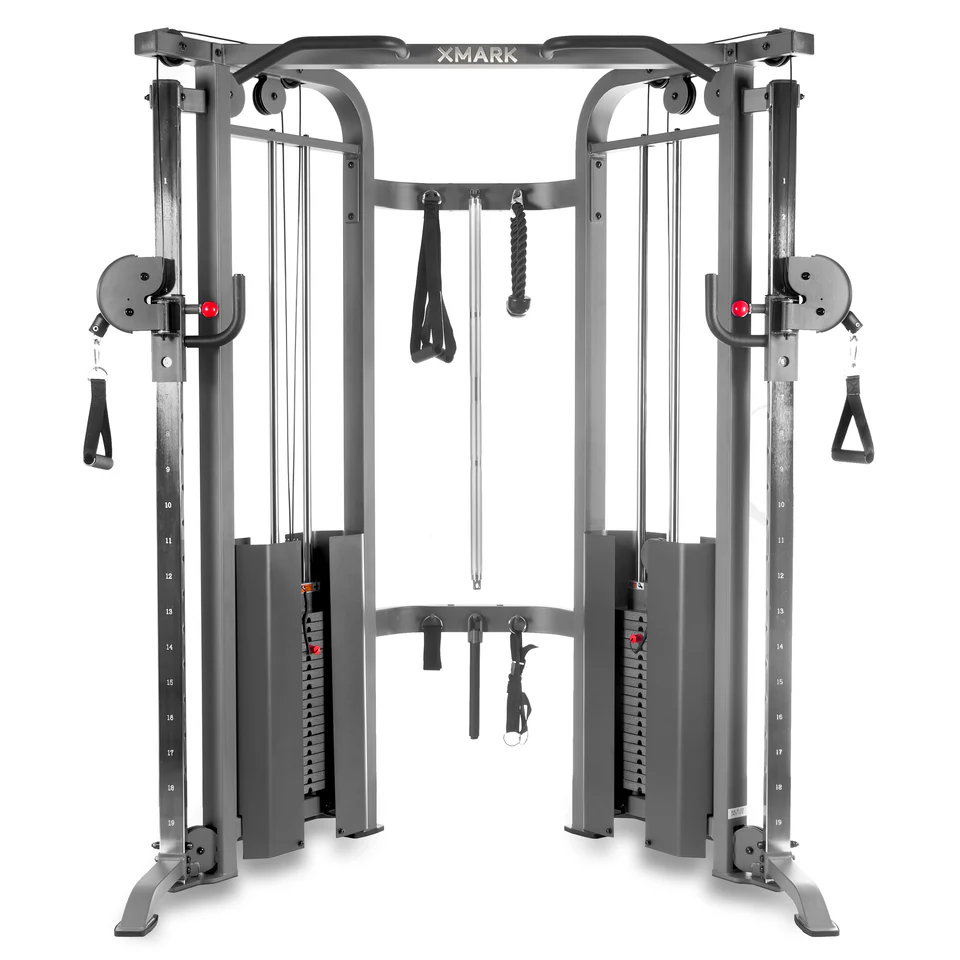
But they come with significant trade-offs.
Pricing Reality
Quality functional trainers start around $1,200-1,500 for models like the Inspire FTX or REP Arcadia, with dual 160-170lb weight stacks and 30+ cable positions. Premium models exceed $3,000.
What You Get
Cable machines provide consistent tension throughout a movement’s range of motion. This is good for isolation exercises like cable flyes, tricep pushdowns, and face pulls. The ease of changing weight with a pin makes drop sets and quick tempo changes simple.
What You Don’t Get
Cables cannot replace compound barbell movements. You cannot effectively replicate a heavy squat, deadlift, or bench press on a cable machine. Research shows compound exercises provide superior strength gains for overall development.
The Power Rack Alternative
Here’s the key insight: adding a $350 cable attachment to a power rack provides similar cable functionality at a fraction of the cost, while still supporting heavy compound lifts. You get both worlds—barbell training AND cable work—for less than the cost of a standalone cable machine.
Best for: Lifters who already have a power rack setup, don’t want (or can’t) add a cable attachment to it, and simply love cable exercises for accessories
Skip if: You don’t already have a power rack setup
Bodyweight Exercises
Cost: 😊 (Excellent - free)
Space: 😊 (Excellent - your body)
Progression Ability: 😞 (Poor - can’t maintain optimal rep range)
Bodyweight training costs nothing and requires no equipment — compelling advantages. But progression limitations make it unsuitable as a long-term primary strength training method.
The Progression Problem
Effective strength and hypertrophy training requires staying in a 5-15 rep range most of the time. Bodyweight exercises make this nearly impossible:
Too Easy: If you start doing 5 pushups, you’ll quickly progress to 10. And then 20. Then 30. And then? At that point, you’re building muscular endurance, not strength. Research shows high-rep sets (25+ reps) don’t build strength as effectively as moderate rep ranges with heavier loads.
Too Hard: Many people can’t do a single pull-up. Even progressing to 3-5 reps takes months. This is too few reps for optimal hypertrophy work (though fine for strength).
Opposite Extremes: You might do 100 air squats easily but can’t do 5 pull-ups. Finding bodyweight movements that challenge all muscle groups in the sweet spot is usually difficult, and often impossible.
Best for: Traveling, beginners starting strength training, supplementary work, maintaining fitness when equipment unavailable. Or you just want to work our right now. In which case, great!
Skip when: You have access to equipment or a gym.
Resistance Bands
Cost: 😊 (Excellent - $20-100 for complete set)
Space: 😊 (Excellent - highly portable)
Progression Ability: 😞 (Poor - inconsistent resistance, hard to quantify)
Resistance bands share many benefits with bodyweight training—portability, low cost, minimal space—but also share the critical weakness of poor progression capability.
The Resistance Curve Problem
Unlike weights that provide consistent resistance throughout a movement, bands create variable resistance that increases as they stretch. This can be useful for specific applications (accommodating resistance in powerlifting), but makes it difficult to quantify and track progressive overload.
How do you know if you’re getting stronger? With a barbell, you added 5 pounds. With bands, did you stretch the red band 2 inches further, or switch to the blue band, or stand further from the anchor point? The lack of clear progression metrics is problematic.
Best for: Traveling, warm-up and activation work, rehab/prehab exercises, elderly lifters or those recovering from injury, supplementary work
Skip if: You have access to other equipment or a gym.
All-in-One Gym Machines
All-in-one home gym machines promise everything in a single piece of equipment.
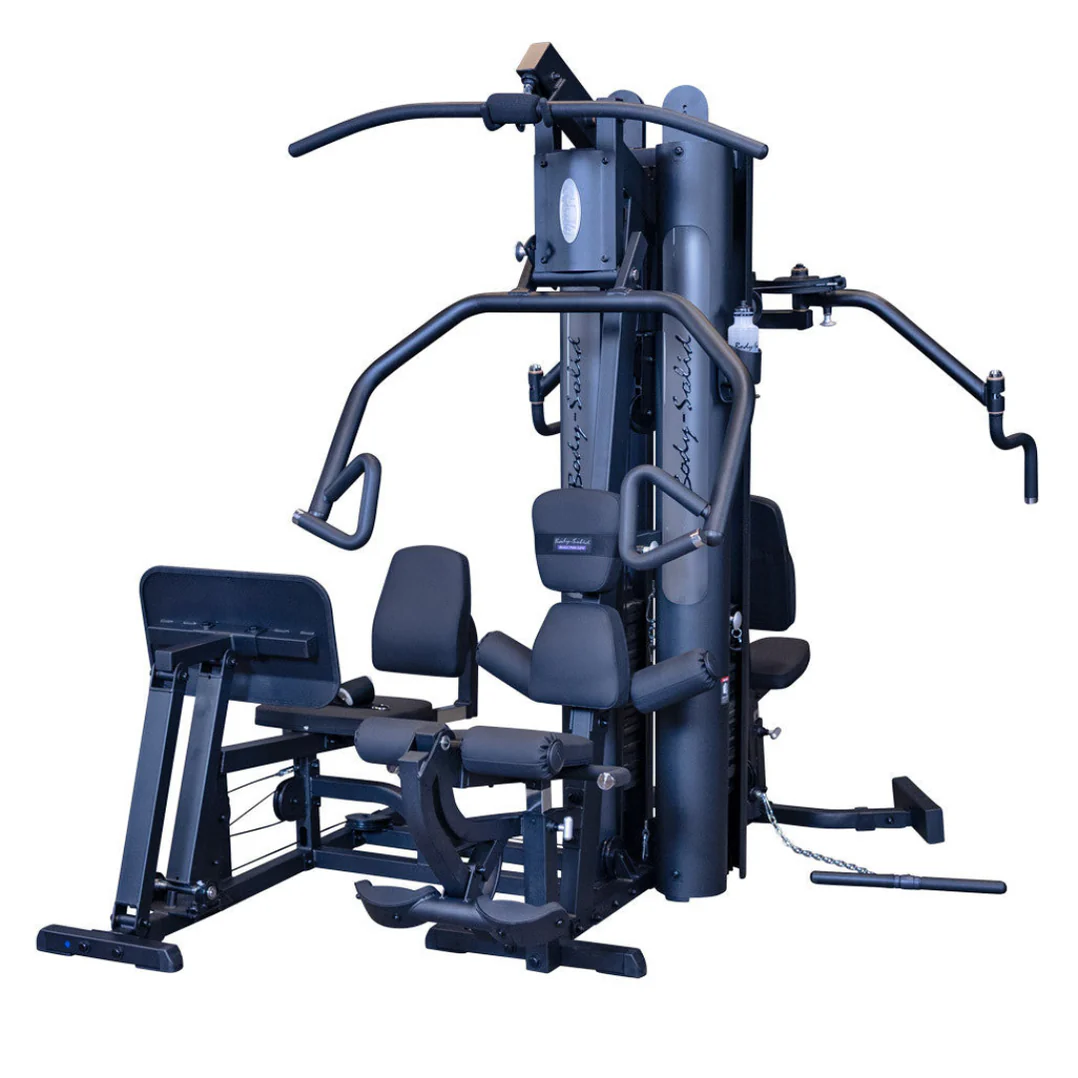
The reality is more nuanced, with massive variation in quality, features, and value across three distinct categories.
Basic All-in-One Machines (No Leg Station)
Cost: 😐 (Moderate - $300-600)
Space: 😊 (Good - compact footprint)
Progression Ability: 😞 (Poor - limited weight stack)
The Marcy MWM-990 at $599 typifies this category. You get a chest press station, lat pulldown, low row, and maybe a tricep station. The weight stack maxes at 150 pounds.
The 150lb Problem
A 150-pound weight stack might sound like a lot, but consider this: an intermediate male lifter squats 200-300 pounds for reps. You’ll outgrow 150 pounds quickly. And then you need to buy an entirely new rig.
No Leg Development
These machines omit leg exercises entirely — a critical limitation since legs contain your largest muscle groups and drive overall strength development.
Verdict: Suitable for beginners with severe space constraints or limited budget, who understand they’ll outgrow this equipment quickly.
All-in-One Machines with Leg Press Station
Cost: 😞 (Poor - $800-1,500)
Space: 😐 (Fair - larger footprint)
Progression Ability: 😐 (Fair - 210-300lb stacks)
The Powerline P2X at $1,535 adds leg press, leg extension, and leg curl to the basic package, with a 210-pound weight stack.
Complete Body Coverage
This category addresses all major muscle groups with familiar gym movements. The familiarity makes these machines less intimidating than barbells for beginners.
Still Expensive, Still Limited
At $1,500, you could have purchased a complete power rack setup with a barbell, plates, adjustable bench, and cable attachment—equipment that offers far more progression potential and exercise variety.
The 210-300lb weight stack becomes limiting for leg exercises as you progress, whereas the power rack setup can be progressed nearly infinitely and for little additional cost.
Verdict: Fine if you’re intimidated by barbells and budget allows, but dollar-for-dollar, a power rack delivers better long-term value.
All-in-One Machines with High-Low Cable Stations
Cost: 😞 (Very Poor - $1,500-3,000+)
Space: 😐 (Fair)
Progression Ability: 😊 (Good - dual stacks, 200-250lbs each)
Premium all-in-one machines add adjustable cable stations (high, mid, low positions) with dual selectorized weight stacks of 200-250 pounds each.
Maximum All-in-One Versatility
This configuration provides the most exercise variety of any single machine: traditional stations plus functional trainer cable work. Weight changes take seconds with pin adjustments.
The $2,500+ Price Reality
At this price point, you’re spending more than you would on a complete power rack setup plus going on vacation. The all-in-one saves some floor space but sacrifices progression potential (weight stacks max out; barbells don’t).
Verdict: If you have the budget and strongly prefer machines over barbells, this is a good option. If you have this level of budget, however, we strongly encourage you to go for a sweet power rack, with high-low cable, nice barbell and weight plates, adjustable bench, landmine attachment, AND a vacation.
Selectorized vs Plate-Loaded All-in-One Machines
If you have your heart set on an all-in-one machine, one final decision is whether to get a selectorized weight stacks or plate-loaded system.
Selectorized (Weight Stack) Machines:
- Easier drop sets and quick weight changes
- More expensive
- Weight limited to the stack size (typically 150-300lbs)
- Cannot upgrade capacity
Plate-Loaded Machines:
- Cost about 1/3 as much as selectorized
- Unlimited weight capacity (add more plates as you progress)
- Use the same plates as your barbell
- Slower to change weight between sets
Given our stance on the benefits of power racks, we encourage the plate-loaded machines: when you outgrow them - and if you use Pick It Up you will! - you can keep all your plates and use them in your new power rack.
Critical Features Checklist for Any All-in-One Machine:
- ✓ Weight stack minimum 200lbs (or plate-loaded)
- ✓ Leg press/extension/curl stations included
- ✓ Multiple cable positions (high/low at minimum)
Budget Tiers with Specific Equipment Configurations
Rather than thinking about equipment in isolation, think in complete workout systems organized by realistic budget tiers.
Here’s what you can build at four price points, with specific product recommendations and total costs.
Tier 1: $300-600 (Entry Level)
The Smart Start: Barbell + Plates + Landmine
- Budget barbell (7ft Olympic): $100-150
- Weight plate set (255lbs): $200-300
- Landmine attachment: $40-60
- Total: $340-510
This is the foundation you’ll build on. The barbell and plates work for floor presses, deadlifts, rows, and cleans. The landmine attachment adds pressing and rowing variations that approximate dumbbell and cable exercises at a fraction of the cost.
Progression path: Save for Tier 2 to add the power rack, bench, and safety features for complete training. Alternatively, consider working with a coach who can design programming around your current equipment.
Bottom line: Start here and save for Tier 2. If you must buy something you can use immediately without learning barbell technique, dumbbells are your second choice.
Tier 2: $750-1,000 (Best Value - The Sweet Spot)
This is THE setup. If you’re serious about strength training, this is where to start. It delivers the best results per dollar spent and will serve you for decades.
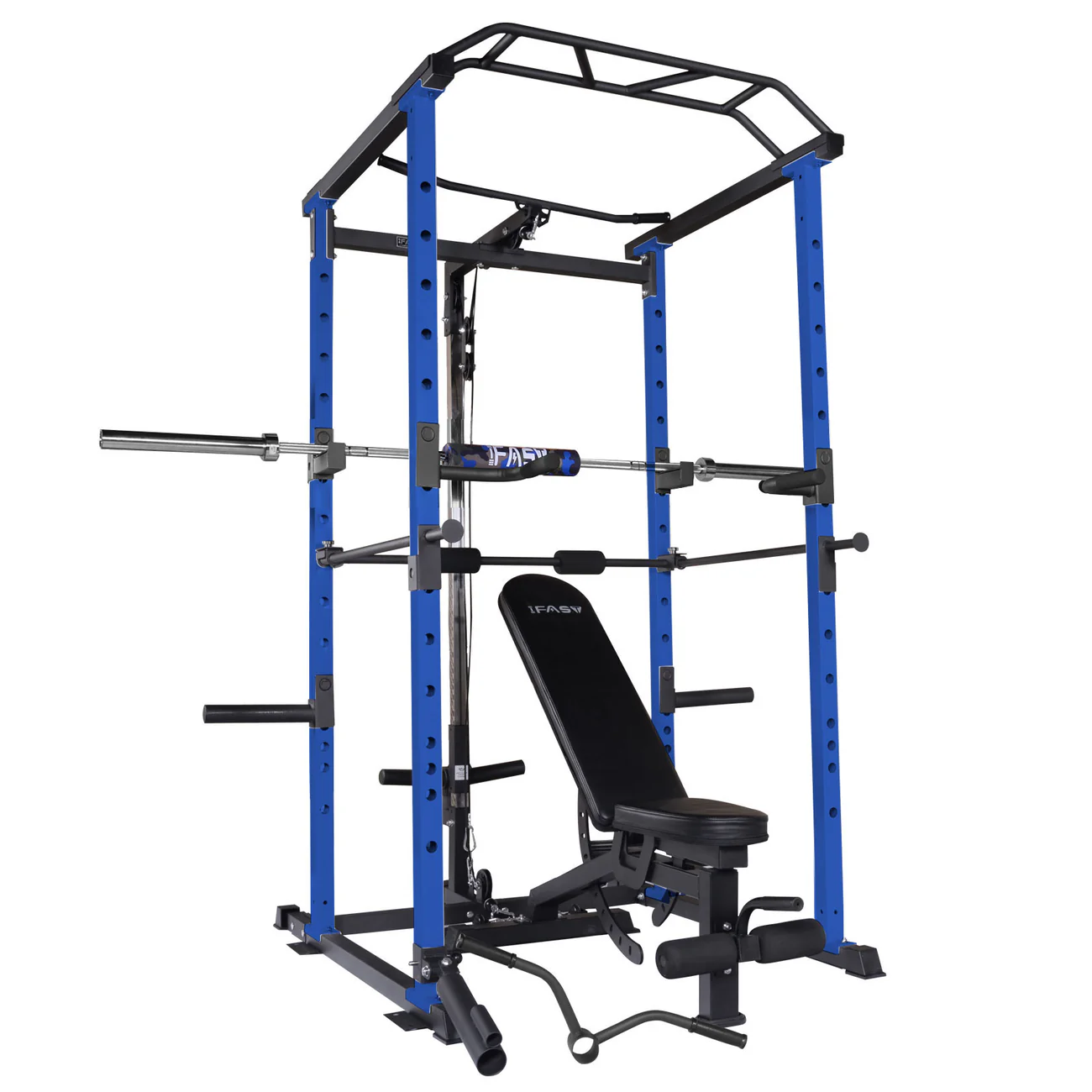
Complete Power Rack Package:
- Giant Lifting Garage Gym Power Rack 2.0 with plate-loaded cable: <$700
- Budget barbell (7ft Olympic): $100-150
- Weight plate set (255lbs): $200-300
- Adjustable bench: $150
- Total: $950-1,150
Budget alternative: Skip the cable attachment and add a landmine if you’re at the lower end (~$40-60 instead of built-in cable).
What you get:
- Complete strength training solution for ALL major lifts
- Safety features for training alone (adjustable safety bars—essential for home training)
- Cable attachment OR landmine for isolation and variation work
- Unlimited progression potential (just buy more plates as needed)
- Pull-up bar included
- Platform for decades of training
The reality: Yes, there’s a learning curve for barbell technique. Yes, you’ll spend a minute loading plates each session. But this one-time investment in learning pays dividends for decades. This is the equipment used by beginners through world champions—because it works.
Tier 3: $1,200-1,500 (Premium Components)
Same setup as Tier 2, higher quality components.
Higher-End Power Rack System:
- Quality power rack with cable system: $500-700
- Quality barbell (better knurling, bearings): $200-300
- Full plate set (400+lbs): $400-500
- Adjustable bench: $200-300
- Total: $1,300-1,800
What changes from Tier 2: Better build quality, smoother bearings in the barbell, more weight capacity, better bench padding and stability. The core formula stays the same—you’re just buying components that will last longer and feel better to use.
Add a standalone functional trainer? If you already have the barbell setup above and want dedicated cable work, the Inspire FTX or REP Arcadia ($1,200-1,500) adds dual cable stations. But this is supplementary—get the power rack first.
Tier 4: $2,000-3,000+ (Complete Home Gym)
At this budget, build a home gym that rivals commercial facilities. This isn’t strictly necessary, but if you want a sweet, sweet setup, here you go.
Complete Power Rack System:
- Quality power rack with cable system: $700-1,000
- Premium barbell (competition-grade): $300-400
- Extensive plate set (600+lbs): $600-800
- Quality adjustable bench: $300-400
- Adjustable dumbbells: $300-700
- Landmine attachment (if not already included): $40-60
- Specialty bars (trap bar, safety squat bar, etc.): $200-400
- Total: $2,440-3,760
What you get: Every tool you need for decades of strength training. You’ll never outgrow this setup. The specialty bars add training variety, the dumbbells handle accessory work, and the extensive plate set means you’ll never need to buy more weight (unless you become exceptionally strong).
This is the endgame. You’re done buying equipment. Now you just train.
Common Mistakes to Avoid
All-in-one machines with inadequate weight stacks—less than 200lbs severely limits progression, especially for legs.
Choosing Smith machines over power racks—research shows free weights activate more muscles and build functional strength better at similar cost. Unless you’re planning to sue yourself, just skip these.
Equipment that can’t support progressive overload—bodyweight, bands, kettlebells, or dumbbells as primary tools limit long-term progression and plateau-breaking strategies.
Ignoring safety features—power rack safeties are essential when training alone at home, not optional. Get the metal bar safeties, not the cheaper “safety strap” options.
Fancy features over progression—bluetooth, screens, and tech don’t matter if you can’t keep adding weight.
Buying cables before barbells—functional trainers can’t replace heavy squats, deadlifts, and presses for building strength.
How Equipment Choice Affects Your Training Program
Equipment doesn’t just determine what exercises you can do—it determines whether you can implement the training principles and muscle activation patterns that produce results.
Progressive Overload Requires Appropriate Equipment
Research shows progressive overload is the primary driver of strength gains. You must be able to add weight in small increments (2.5-5lbs for upper body, 5-10lbs for lower body) consistently over time. Learn more about breaking through plateaus with proper programming.
Equipment that doesn’t support this—bodyweight exercises, resistance bands, machines with inadequate weight stacks—becomes a bottleneck that limits your progress regardless of how hard you work.
How Pick It Up Adapts to Your Equipment
Not everyone is building a home gym from scratch. Many people already have the equipment they’re going to have and want to train with. Pick It Up works with what you’ve got.
Pick It Up asks about your available equipment during setup and creates programming tailored to what you own. Have just dumbbells? The app selects dumbbell-focused exercises and adjusts target weights accordingly. Have a full power rack setup? You get comprehensive programming across all major barbell lifts.
The app’s wave periodization system automatically varies your training intensity and volume each week, but this only works if your equipment supports the full loading spectrum. This is why we consistently recommend barbell setups—they give the app maximum flexibility to optimize your programming.
Quick Reference: Home Gym Equipment Comparison
| Equipment | Cost | Space | Progression | Best For |
|---|---|---|---|---|
| Dumbbells | 😞 | 😊 | 😐 | Beginners, accessories |
| Kettlebells | 😞 | 😊 | 😞 | Beginners, accessories |
| Barbell + Rack | 😊 | 😊 | 😊 | Best Option |
| Smith Machine | 😞 | 😞 | 😐 | ❌ Skip this |
| Cable Machine | 😞 | 😐 | 😊 | Isolation work |
| Bodyweight | 😊 | 😊 | 😞 | Travel, beginners |
| Resistance Bands | 😊 | 😊 | 😞 | Travel, rehab / prehab |
| All-in-One (Basic) | 😐 | 😊 | 😞 | Space-limited beginners |
| All-in-One (+ Legs) | 😞 | 😐 | 😐 | Machine-preferring lifters |
| All-in-One (+ Cables) | 😞 | 😐 | 😊 | High budget + convenience |
Winner for Most People: Barbell + Power Rack delivers the best balance of cost, progression potential, and versatility.
Common Questions About Home Gym Equipment
What’s the best all-in-one home gym?
Dollar-for-dollar, a power rack with barbell and plates delivers better long-term results than any all-in-one machine at the same price. If you have the budget, add the cable attachment. You’ll be set for decades.
Is a home cable machine worth it?
Only if you already have barbell equipment for compound lifts. A power rack with a $350 cable attachment provides similar functionality at half the cost of a standalone functional trainer ($1,200-1,500). Buy the barbell setup first, add cables later if budget allows.
Can I build serious strength with just dumbbells?
Adjustable Dumbbells are great if that’s all you have budget/space for. But they only work well up to 50-75 pounds per hand for most beginners and early-intermediate lifters. Beyond that, loading heavy dumbbells becomes awkward and dangerous, and costs scale poorly. You’ll outgrow dumbbells as a primary strength tool quickly.
What’s better: all-in-one machine or power rack?
Power rack wins for progression capacity, exercise versatility, long-term value, and functional strength development. Research shows free weights activate more muscles. Choose the power rack unless you’re intimidated by barbells and unwilling to learn—see our budget tiers above.
How much should I spend on a home gym?
See our budget tier recommendations above. For $750 to $1,000 you should be able to get a complete power rack package (rack + barbell + plates + bench + cable OR landmine) that will last you decades. Spend on equipment that supports progression, not fancy features.
Do I need a power rack or can I just use a barbell?
You can train with just a barbell (floor presses, deadlifts, rows), but this limits exercise selection and creates safety issues. Training alone at home requires safety bars for squats and bench press. For home training, a rack is essential safety equipment, not optional.
Should I buy a Smith machine for my home gym?
No. These are simply worse than power racks in every way except for liability if you’re running a commercial gym.
Are kettlebells or dumbbells better for strength training?
This is really a personal choice, and neither is ideal for long-term progression. If you like dumbbells for accessory work and have budget, great. If you prefer kettlebells, great. Your primary strength is going to come from barbells or heavy machine work in either case.
What about plate-loaded vs selectorized all-in-one machines?
Plate-loaded machines cost about 1/3 as much and offer unlimited weight capacity using your existing barbell plates. They also allow you to transfer much of your investment – weight plates – to a barbell + power rack setup later on if you want. Thus we recommend plate-loaded machines even though they’re slightly less convenient than selectorized.
How much space do I need for a power rack?
A basic power rack requires approximately 8ft x 8ft of floor space (64 sq ft) including clearance for a barbell. Folding racks can reduce the footprint to 4ft x 4ft when not in use. Ceiling height should be at least 7.5-8ft for comfortable use of the pull-up bar.
Is a power rack worth it for beginners?
Yes. A power rack is one of the best investments for beginners because it grows with you. Unlike equipment with weight limits (dumbbells, machines), a power rack supports progression from your first workout through years of training. The safety features also make it ideal for training alone at home.
Further Reading & References
For those wanting to explore the research behind equipment choices and training principles:
-
Selectorized vs. Plate-Loaded Strength Equipment: Pros and Cons - REP Fitness - Comprehensive comparison of weight stack vs plate-loaded systems for home gyms, including cost analysis and progression considerations
-
Smith Machine vs Free Weights: Which Is Better? - Garage Gym Reviews - Research-backed analysis showing free weights activate more stabilizing muscles than Smith machines, with implications for functional strength
-
Free Weight vs Machines: Is One Better Than the Other? - University of Delaware BMEG442 - EMG study showing significantly greater medial deltoid activation in free weight bench press compared to Smith machine
-
Dumbbells vs. Kettlebells: Which Is Better for Your Workouts? - BarBend - Research comparing dumbbells (superior for strength/hypertrophy) vs kettlebells (superior for power development and ballistic training)
-
Best Power Racks with Lat Pull-downs (2026) - Garage Gym Reviews - Current pricing and feature comparison of power racks with cable attachments, including budget options under $700
-
Best Adjustable Dumbbells (2026) - Garage Gym Reviews - Expert testing and pricing for adjustable dumbbell sets ranging from $200-700
-
Best Cable Machine for Home Gyms (2026) - Garage Gym Reviews - Functional trainer comparison and recommendations, with analysis of weight stack sizes and cable positions
-
Plate-Loaded vs Selectorized Cable Systems - Bells of Steel - Cost analysis showing plate-loaded systems cost approximately 1/3 of selectorized equivalents
-
Are Power Racks with Cable Attachments Worth It? - Bells of Steel - Analysis of adding cable functionality to power racks vs buying standalone functional trainers
-
Marcy MWM-990 Home Gym Review (2026) - BarBend - Evaluation of budget all-in-one machine, including weight stack limitations and exercise variety
-
ACSM Guidelines: Exercise for Developing and Maintaining Fitness - American College of Sports Medicine - Evidence-based resistance training recommendations, including progressive overload principles
-
Progressive Overload Without Progressing Load? The Effects of Load or Repetition Progression - Plotkin et al., 2022 - Research demonstrating that both load and repetition progression are effective strategies for building strength
Conclusion
Buy a power rack, barbell, weight plates, and adjustable bench. That’s it. That’s the answer.
At any budget tier, this formula is the winner. Whether you’re spending $500 or $3,000, the core remains the same—you’re just buying higher quality components or adding accessories as budget allows.
If budget is an issue and you need to stage things:
- Start with a barbell + weight plates.
- Then add a power rack
- Then add an adjustable bench
- Then add a landmine attachment, or high-low cable attachment if you can.
- Then you’re done!
If you can spend $750 - $1,000 right now, then great. Buy the barbell, weight plates, adjustable bench, power rack, landmine attachment, and high-low cable attachment right now and be done!
Stop researching. Start training. Equipment should enable progression, not limit it. The power rack formula does exactly that.
Ready to turn your equipment into results? Pick It Up creates personalized strength training programming based on your available equipment, automatically implementing periodization and progressive overload so you never plateau.
Join Pick It Up and build serious strength—whatever equipment you choose.
Special offer: Beta users get lifetime access for just $5/month. Start your 7-day free trial today.